
What is an actinic keratosis? by Dr Yeung Ho Hong 楊浩康
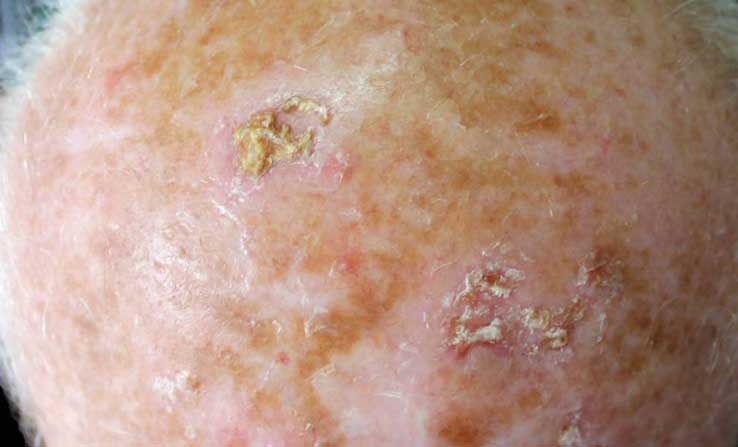
What is Actinic Keratosis?
Actinic Keratosis, also known as Solar Keratosis, is a precancerous squamous lesion that forms on the skin after prolonged sun damage. This condition is considered an early form of Squamous Cell Carcinoma (SCC), making early detection and treatment highly important. Patients often notice these lesions in areas with chronic sun exposure, indicating that skin cells may be progressing toward malignancy.
Aetiology and Risk Factors
The primary cause is linked to long-term exposure to short-wave ultraviolet B (UVB) radiation, which directly damages the DNA of skin cells, leading to abnormal cell proliferation and keratinization. In addition to sun exposure, chemical carcinogens and radiation damage may also contribute to the pathological transformation of normal skin cells. Furthermore, genetic factors and advancing age increase the risk of developing actinic keratosis.
Symptoms and Clinical Presentation
Clinically, actinic keratosis varies in appearance, presenting as flat or thickened papules or plaques, with colors ranging from white, yellow, skin-toned, or pigmented. Most lesions are asymptomatic, though some patients may experience mild localized pain or sensitivity. Compared to other skin lesions, these typically have well-defined edges and often feature a central keratinized core, which, when removed, reveals a characteristic crater-like appearance—serving as a key distinguishing feature from other benign or malignant skin conditions.
Actinic keratosis commonly appears in areas exposed to prolonged sunlight, such as the ears, nose, temples, forehead, bald scalp, and backs of the hands. These regions are prone to lesion formation due to routine ultraviolet exposure. Poor indoor lighting or certain indoor work environments may, in some cases, contribute to the development of keratinized lesions, but ultraviolet exposure remains the predominant risk factor.
Although actinic keratosis is typically benign, it signals that skin cells may be in a precancerous state. The transformation of a single actinic keratosis into a malignant condition is rare; however, if a patient has more than 10 lesions, the risk of developing squamous cell carcinoma in the future rises to approximately 10% to 15%. Additionally, if actinic keratosis becomes painful, significantly thickened, ulcerated, or shows signs of enlargement, malignant transformation should be strongly suspected, necessitating prompt medical attention.
Beyond active treatment, preventive measures are equally critical. Reducing ultraviolet exposure, using high-SPF sunscreen, wearing sun-protective hats and sunglasses, and limiting time in the sun all help decrease the formation of new lesions. Moreover, regular skin examinations are essential for early detection and treatment, particularly for patients with multiple keratinized lesions, as early monitoring can significantly reduce the risk of malignant progression.
In summary, actinic keratosis is a precancerous condition caused by prolonged sun exposure and other external stimuli. While most cases are benign, its potential to evolve into squamous cell carcinoma underscores the importance of early diagnosis and scientifically grounded treatment.